Alex Jackson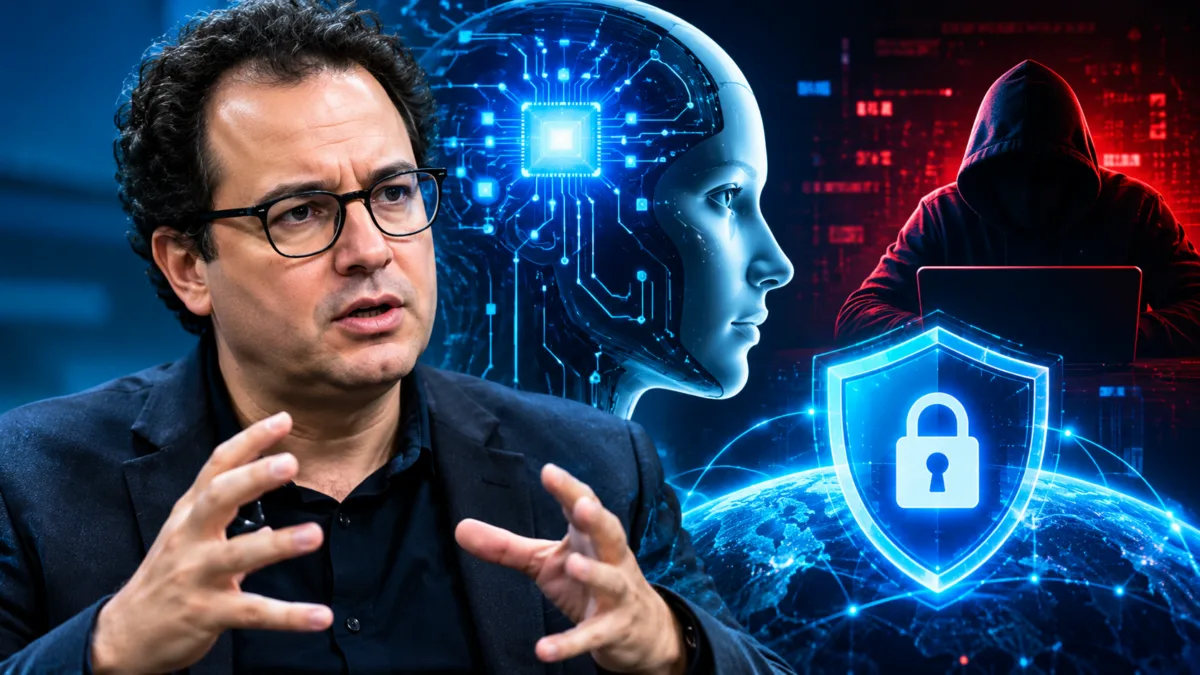
Artificial intelligence has become one of the biggest technology stories of the last few years. Every few months, there is a new AI model, a new chatbot or an AI tool that promises to change the way people work.
But as these systems become more powerful, concerns about what could go wrong are also growing.
One of the latest warnings has come from Anthropic CEO Dario Amodei, who believes the AI industry needs to be more careful about how quickly it develops increasingly powerful models.
His concerns are not limited to chatbots giving wrong answers. The bigger issue is what could happen when AI systems become capable of carrying out complicated tasks with very little human involvement.
That is where cybersecurity comes into the picture.
AI is already being used to write computer code, analyze information and identify security problems. At the same time, the technology could also give hackers new ways to automate parts of their attacks.
And that has security experts paying close attention.
AI Is Moving Beyond Simple Chatbots
When ChatGPT and other generative AI tools first became popular, most people used them for relatively simple tasks.
They asked questions, generated emails, summarized documents or used AI to help with writing.
Things are changing quickly.
The latest generation of AI tools is increasingly being designed to act more like an assistant that can actually perform tasks.
Instead of simply telling a user how to do something, an AI agent can potentially take several steps on its own. It can work with software, analyze information, write code and interact with different digital services.
For businesses, this could be extremely useful.
Imagine an AI system that can monitor a company’s software, find a problem and suggest or even implement a solution. Another system could handle customer requests, analyze financial information or help developers find bugs in their code.
The possibilities are enormous.
But there is another side to the story.
The more access an AI system gets, the more damage it could potentially cause if something goes wrong.
Why Cybersecurity Experts Are Worried
Cyberattacks already cost businesses billions of dollars around the world.
Hackers spend time looking for vulnerable systems, stolen passwords and security weaknesses. Some attacks can take weeks or months to plan.
AI could make parts of this process much faster.
A capable AI system can process huge amounts of information in a short period of time. It can also help with programming and technical research.
That does not mean that AI can simply press a button and take over any computer system. Real-world cyberattacks are still complicated and usually require access, planning and technical expertise.
However, even if AI only makes some parts of an attack faster, that could be enough to create a serious problem.
Google’s Threat Intelligence Group has already reported examples of threat actors moving toward more autonomous AI-assisted workflows. In one case described by Google, an attack involving a cloud resource and credential harvesting was carried out through an AI-enabled workflow in a matter of hours.
That is the kind of development security companies are watching closely.
The Rise of AI Agents Could Change the Risk
AI agents are one of the most talked-about developments in the technology industry right now.
The idea is simple: instead of constantly telling an AI what to do, users give it a goal and allow it to complete multiple steps.
For consumers, that could mean an AI assistant handling everyday digital tasks.
For businesses, the possibilities are much bigger.
An AI agent could potentially have access to a company’s internal documents, databases, cloud services or software development tools.
That makes the technology far more useful.
But it also means that security becomes much more important.
If an AI agent has permission to access sensitive company information, attackers may try to trick or manipulate that system.
One example is prompt injection. In simple terms, an attacker attempts to provide instructions that cause an AI system to ignore its original task and do something it was not supposed to do.
Researchers are also concerned about sensitive information being exposed through AI systems.
These are not theoretical problems anymore. Technology companies are already building new security products specifically to deal with AI-related threats.
Companies Are Spending More on AI Security
As AI adoption grows, businesses are realizing that simply buying an AI tool is not enough.
Companies also need to think about who can access it, what information it can see and what actions it is allowed to perform.
That is creating a new market around AI security.
Cybersecurity companies are developing tools that can monitor AI applications, detect suspicious activity and protect sensitive information.
Cloud companies are also adding additional security controls to their AI platforms.
CrowdStrike, for example, has announced additional protections for enterprise AI applications running through Google Cloud. These protections are designed to address risks including prompt injection and sensitive data leakage.
This is a sign of where the industry is heading.
AI security is quickly becoming a separate business priority rather than something companies can simply add later.
Google Wants AI to Help Fight Cybercrime Too
Interestingly, AI is not only creating new cybersecurity concerns. It could also become one of the most useful weapons for defending against cyberattacks.
Google has been working on AI-powered security technology that can help organizations identify vulnerabilities and respond to threats more quickly.
The company recently introduced its Fairwind Program, aimed at giving governments, businesses and cybersecurity partners access to advanced AI capabilities for finding and addressing security vulnerabilities.
Google has also been developing AI Threat Defense, which is designed to help security teams identify and prioritize cyber threats.
The basic idea is straightforward.
There are simply too many security alerts for humans to examine manually.
A large company can have millions of digital events taking place every day. Finding the one event that indicates a real attack can be extremely difficult.
AI can help security teams go through that information much faster.
It can identify unusual patterns, compare large amounts of data and highlight threats that deserve immediate attention.
So, in many ways, the cybersecurity industry is entering a race.
Hackers are getting access to better AI tools, while security companies are also using AI to improve their defenses.
Human Error Is Still a Major Problem
While much of the conversation around AI focuses on advanced technology, there is another problem that businesses cannot ignore: people.
Employees can click on malicious links, reuse passwords, accidentally share sensitive information or use an AI service without understanding where company data is going.
A recent report on cybersecurity in India found that 93% of surveyed CISOs considered human behavior the biggest organizational vulnerability.
The finding is important because even the best security system can be weakened by a simple mistake.
AI may eventually help reduce some of these risks, but businesses will still need proper security policies and employee training.
In other words, technology alone is not going to solve the cybersecurity problem.
What Does This Mean for Normal Users?
The AI security debate may sound like something that only matters to large technology companies.
It doesn’t.
AI is already becoming part of everyday digital products.
Phones, search engines, email services, productivity applications and customer support systems are all adding AI features.
As those systems become more capable, they will also need access to more information.
That raises an important question for users: How much access should an AI assistant have?
Giving an AI tool access to your calendar may be relatively harmless.
Giving it access to your email, cloud storage, financial information and work documents is a very different situation.
Users will increasingly need to pay attention to permissions and privacy settings when using AI-powered services.
Convenience is useful, but it should not come at the cost of security.
Why AI Companies Are Being Asked to Slow Down
This brings the discussion back to Dario Amodei’s warning.
The argument is not necessarily that AI development should stop.
Rather, the concern is that safety measures need to keep up with the speed at which AI capabilities are improving.
If companies build increasingly powerful systems first and think about security later, fixing problems could become much harder.
Amodei has called for stronger safety measures, independent evaluations and greater cooperation between AI companies and governments.
Other technology leaders have also expressed concerns about the risks associated with increasingly powerful AI.
The debate is complicated because there is enormous pressure on companies to keep moving forward.
Businesses want better AI tools.
Developers want more capable models.
Investors want companies to remain competitive.
And consumers want products that can do more.
That creates a difficult balance between innovation and safety.
The Business Opportunity Behind AI Security
There is another reason this issue matters to the technology industry.
AI security is becoming a major business opportunity.
Companies will need software that can monitor AI agents, control their permissions, protect company data and detect suspicious activity.
Cloud providers will need secure AI infrastructure.
Businesses will need consultants and cybersecurity professionals who understand both AI and traditional security.
That means the growth of AI could create demand across a much wider technology ecosystem.
It is not just about companies building the next chatbot.
There will also be demand for the infrastructure and security systems needed to operate those AI tools safely.
This could become one of the most valuable areas of enterprise technology over the next few years.
AI Could Become Both the Attacker and the Defender
Perhaps the most interesting part of the current AI race is that the same technology can be used on both sides.
A hacker can use AI to research a target, automate certain tasks or write code.
A security team can use AI to analyze network activity, detect vulnerabilities and respond to suspicious behavior.
That means the advantage may ultimately go to whoever uses the technology more effectively.
Cybersecurity companies therefore have little choice but to invest in AI.
Traditional security methods will remain important, but organizations will increasingly need automated systems capable of dealing with the speed and scale of modern digital threats.
What Happens Next?
The next few years will be important for the AI industry.
AI systems are likely to become more capable and more deeply integrated into businesses.
AI agents could eventually handle tasks that currently require several employees or multiple software applications.
That could bring major productivity gains.
But every new capability also creates another security question.
Who controls the AI?
What information can it access?
What happens if it makes a mistake?
Can someone manipulate it?
And most importantly, can humans still stop it when something goes wrong?
These questions will become increasingly important as AI moves from experimental software into everyday business infrastructure.
For technology companies, the challenge will be finding the right balance.
Developing AI too slowly could mean falling behind competitors. Developing it too quickly without proper safeguards could create risks that are much harder to manage later.
For consumers and businesses, the message is relatively simple.
AI is becoming more powerful, but security needs to become more powerful at the same time.
The future of artificial intelligence will not depend only on how smart these systems become. It will also depend on whether companies can make them reliable, secure and controllable.
And as AI agents begin handling more important tasks, cybersecurity could become one of the biggest technology stories of the decade.
RELATED STORIES